Inspiration to create a Farmer’s Market

Introduction:

This is a summary of an interview of Ms Maheen Zia conducted by Naveed Ahmed, Seed Sovereignty Program Coordinator from Roots for Equity. The context of the interview is on Maheen Zia’s work with Karachi Farmer’s Market based in Karachi, Pakistan.

Ms Zia is one of the key founders of the Karachi Farmer’s Market. She is working to highlight the work of farmers and give importance to their work. She is promoting the work of farmers while sitting in the city and has the passion and ability to work for farmers. We are grateful to her that she has given her time for this interview.

Question: What attracted you to create a farmers market?

Answer: The news keeps coming that our food has become contaminated, and pesticides, fertilizers and GMOs are being used for it. We are cut off from nature and at the same time, the way disease is growing, it is in front of us too. We are six people who decided to start the farmers’ market. In all of our (six founders) families someone has been sick. It has made us realize that what we were eating makes us sick, so what could be its alternative? Personally, my father had cancer. At that point we started looking for organic flour and milled flour (chaki ka atta) and started thinking about what we were eating. Now cancer has become very common – in every household, in our close friends’ families – someone has been through this disease.

We were searching for pure food items, someone tried to find desi eggs or milks – but we wanted to have a single market where we could buy what we needed for our households. We wanted to have a system that for those who were selling here we could check what they were saying was actually being practiced and it was correct. This is why we started the market; it was started in August 2015 – it will now be five years. It is a small market but in the past five years about 30% of the people regularly buy things from here. They know that products have been checked and are of quality.

Question: Artificial agriculture or chemical agriculture produces more. So why should farmers adopt agroecology?

Answer: If your income is good by giving poison to others, then this is not correct. First of all, it is wrong in principle to produce something of low quality just because you will get production and it will be sold. This is not being said for any particular farmer but making a point in general. For example, if you have land and you want to grow something that is harmful to health for others but grow pure food elsewhere for yourself, it is wrong. In this age, this is how the world has been set up, and it may be difficult to examine it in this manner. But the way you are growing now has a short time outlook. The way you are growing now, putting pesticides and fertilizers this will degrade your land in the next ten to twenty years – what will you do then? You will not even be able to exchange this land for another piece of land? This land will not be able to grow anymore. So for your present gain you are harming your future. The harm being inflicted on others by what you are growing is an other matter but you are destroying your future, as well.

Naveed: So in the beginning you pointed out the impacts on human health and now you are pointing out that farmers must practice agroecology as (chemical agriculture) impacts land and you will face other problems.

Maheen Zia: Land will be ruined; your health will be ruined. When you use pesticide, it will first affect your family, you will be impacted as well. I believe that there is acute poverty and hence people are helpless and their hands are tied, even when they understand, they don’t have an opportunity to do something else. There is a need to help them and understand their position (majbori).

Question: What benefit you get from farmer’s market?

Answer: It makes us happy! This is an opportunity for people, there are about 300-500 people that are buying from the Farmers’ Market. There is better food getting to their households; and through this small businesses have been set up and running – so a system has been initiated. But this is small, it’s just a handful of people– Karachi in itself is a very big city. A much bigger thing that has happened is the conversation that has been started – we need to eat organically grown food, or sustainable food, we need to consume pure food. Where can we get it? Why should we have pure food? Why is it so expensive? How can we increase its production so that prices can come down? So the discussion that has been started is very important and it has the potential to increase organic production.

Question: Will small and landless farmers benefit from agro ecology?

Answer: Absolutely. They will benefit as over time, their land’s soil quality will become better, production will be better. If we can connect them to the market whatever they grow will fetch a better price, there is also a market available. There is only benefit and no harm. Whoever goes toward chemical agriculture there is only harm; you may be getting money from it at the moment but there is no barkat in this money – this is what I believe.

Naveed: If you practice agroecology you can retrieve land fertility and get an environmentally friendly ecosystem. The way the environment has been impacted, there is disease and global warming, the natural environment has been lost, using poison all of this has died and we can now regain all this through promotion of agroecology.

Question: From where did you get the seed?

Answer: If someone is coming from outside (the country) – I research on heirloom seeds – ancient seeds. Some seed banks keep these seeds and the seeds are from different area, they may not of your area but if the seed adapts to your climate than I think its okay. These seed are generally not invasive but it is very important that where you are they are suited (to that environment), they should be pest resilient; they have more nutrition. So, I search for the seed, try it out and if it starts off, then use it the next year. This is the beauty of real seed; from one seed you can get a whole field because each seed will give you plentiful. This is what nature is; in nature if you work a little hard, respect it, it will give you plentiful benefits.  If you fight with nature than you will have to work hard every year, put poison every year, use chemical fertilizer and so in the end you have to work a lot and the result is still not favorable

Question: You mentioned that you get seeds from the ancient seed bank.

Answer: There is a company in the USA called Rare Seeds. They explain the origin of the seed like I have an Iraqi plant and a Chinese beans plant. These companies provide a complete chain of information, where did this seed come from, in which year, which person cultivated it, for how many years they cultivated it, who brought this seed to us, they value the seed, and this is what their work is.

Question: Can we say that the indigenous people of those areas own these seeds?

Answer: No, because the indigenous people are in a very bad condition and they have also lost their seed, there should be an attempt to find those seeds as well; for example there is a particular bean seed Cherokee Tears. When the Cherokee people were driven out of their lands about 150 – 200 years ago, they brought seeds with them. So it’s not necessary that the indigenous people are preserving their seeds. There are some farming communities and there are some people who think like us that the real asset is your seed, it needs to be saved, especially at a time when hybrids are on the rise and GMOs are being promoted. So this is a very important work that they are doing. People are also buying from them. Small farmers buy from them and plant seeds. And then they save the seeds.

Question: Have you ever tried to get seeds from areas of Pakistan or the suburbs of Karachi?

Answer: Once I was filming in Sindh – near Badin – there was a project where they were reviving Indigo which is an ancient seed of this area and it was a plant that died out in the British era. I took the seed from there but its plant did not grow, I thought I would bring the seed again when I go back to Badin. I try that if I get a real seed I grow it. When I went to Hunza two years ago, I also brought seeds from there, but it did not grow. But maybe its climate was different, only a small sprout came out; it still is good to try things out. We need to build a network within our climate zone so that we can save the real seeds among us. Make many seed banks so that if one seed bank fails there are still other seed banks. Like once I had a beautiful sunflower seed, it had a beautiful flower; I distributed this seed to friends so it could be continued. We have a network of people who try to spread seeds in this manner. I also take seeds from the pansar. For example there is a taramera seed– these are still pure seeds – it’s a local variety; there is also kolongi, there is gaozaban but it did not germinate. I have now brought this seed from abroad and have saved seeds from it and will try it again this year. It’s a very useful plant – you can make tea from its leaves and use it for colds or flu. So this is what I do but a systematic system needs to be set up. This is a science and there are different types of seeds, some are self-seeding and you don’t need to keep them away from other plants. But other variety mix with each other for instant maize, it has to be kept a mile away from other varieties so that they do not cross-pollinate. If we are working on seed preservation, it is important to follow the procedure.

Question: Pakistani farmers are facing financial loss – how can we address this issue??

Answer: I have met only few farmers who came to the market and do not have a very good understanding of Pakistani farmers; I have met a few farmers but have not studied the issue deeply as yet and need to understand it as well. I think our economic situation is dependent on a cash economy and it drives everything. Before we used to have a barter system as well it may not have been so difficult for farmers. There are now so many barriers for farmers. Maybe I need to ask you this question why farmers are facing so many losses?

Green Revolution began under General Ayub. The whole world has been suffering the consequences of the fifty years of Green Revolution, of chemical agriculture. One third of the land is damaged which was arable and we could grow on it; if there is decreasing production and farmers are suffering losses– a big reason has to be that their land and water has been spoiled.

Question: If farmers adopt agro-ecology they will suffer financial loss. How can we compensate for this financial loss?

Answer: We need to think on ways forward. There needs to be a diversity of income. For example may be also including handicrafts.  Also be involved in value added production so that they can have better value. All of us need basic education. It’s not a simple sum game. You will not get to know about everything from instructions on a packet. When we are growing things – it’s a natural process and we need to deepen our learning of nature, of soil. Why is soil so important, it’s not just dirt– it’s like our heart? All that we eat is based on this layer of soil. If we increase the quality of soil we will eat better. If we loose this soil then we will all face starvation. The quality of our soil is critical. We don’t understand the importance of water. These are Allah’s systems; they have been there for thousands of years. These systems were there before us and will be there after us. We are the ones who have destroyed these systems. We have used advanced technologies and believe that by using them we can make it better. But we need to go back to nature and study how systems are managed in nature.
 

Boosting Performing Art Skills of Theatre Artistes working on Social Change

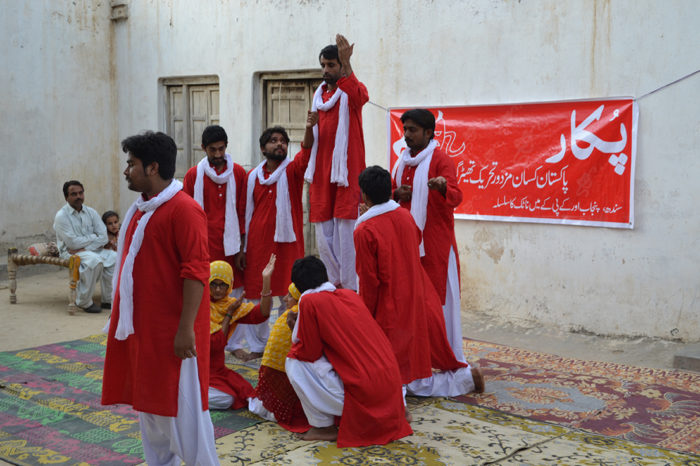
The PUKAR theatre group performing at a local village after the training on Interactive Theatre for Influencing in 2019.

Imam Uddin Soomro is an active member of the Pakistan Kissan Mazdoor Tehreek (PKMT), an alliance of small-scale and landless farmers including women farmers. Imam collects data on crops and conducts awareness sessions for farmers on sustainable agriculture, green revolution and globalization. As a member of a local theatre group named, PUKAR, since 2018, Imam also performs as an interactive theatre artiste in rural villages, organises learning events and writes articles on agriculture and farmers’ rights in local languages.

The PKMT was formed in 2008 as a result of a series of discussions among powerless farmers and social and political activists who felt that an organised platform to voice their demands was essential for small-scale farmers facing social and economic constraints.

“We perform plays that enable us to interact with different communities. The theatre plays address issues that are part of the PKMT struggle, including feudalism and the impact of corporate agriculture. As a theater performer, I was selected as a participant in a training tilted, Interactive Theater for Influencing, in July 2019. The training provided technical knowledge and capacity building opportunities on skills required to influence communities to bring about progress in the society. Our skills of script-writing, communications and character-building were further enhanced in the seven-day residential training.” said Imam.

All seven members of the PUKAR theater group participated in the training which gave them networking and experience- sharing opportunities with other like-minded participants. The session on ‘team building’ and ‘inhibition breaking’ helped participants self-assess themselves and understand their pivotal and influential position in society. Participants learnt about stage directions, allowing the audience to grasp every performers’ act and the message they are conveying through their role plays.

“We met with other theater groups from Peshawar, Sindh and Islamabad. All the groups had different interactive skills to perform as we all engage with different kinds of audiences. The members of other groups shared the issues they highlighted through their plays and how they passed on the resolutions,” shared Imam.

On the last day of the training, participants developed action plans to further implement the learning and skills learnt during the training.

“Initially, we would randomly select issues and base our plays on those issues. After the training, we altered our strategy. We now plan a meeting to identify the common issues that are prevalent in the communities through meetings with community members and develop a script for the play accordingly to work together to rectify the challenges people are facing. CWSA has extended support in reviewing the scripts which we plan to avail,” expressed Imam.

A group exercise that engaged the training participants in planning a theater play with other members of the group allowed collaborative learning and practical experience-sharing through coordination among the members. Imam narrated,

“When we acted with other theater performers, we learnt to show strong facial expressions as that also largely impacts the deliverance of the message and not just the dialogues. This joint exercise helped in modifying our acting and delivery gestures in order to have an even stronger impact in the communities we perform.”

Boosting Performing Art Skills of Theatre Artistes working on Social Change

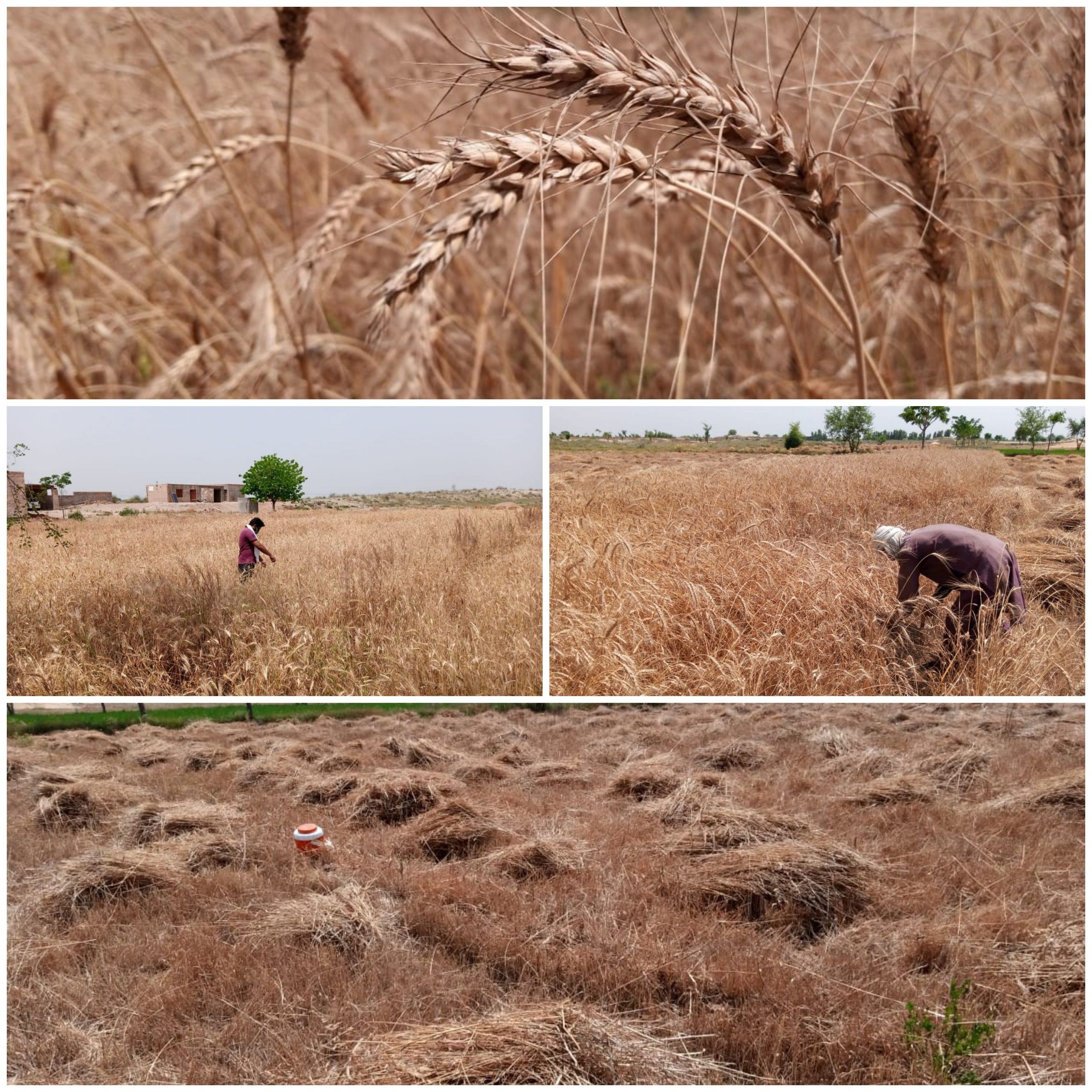
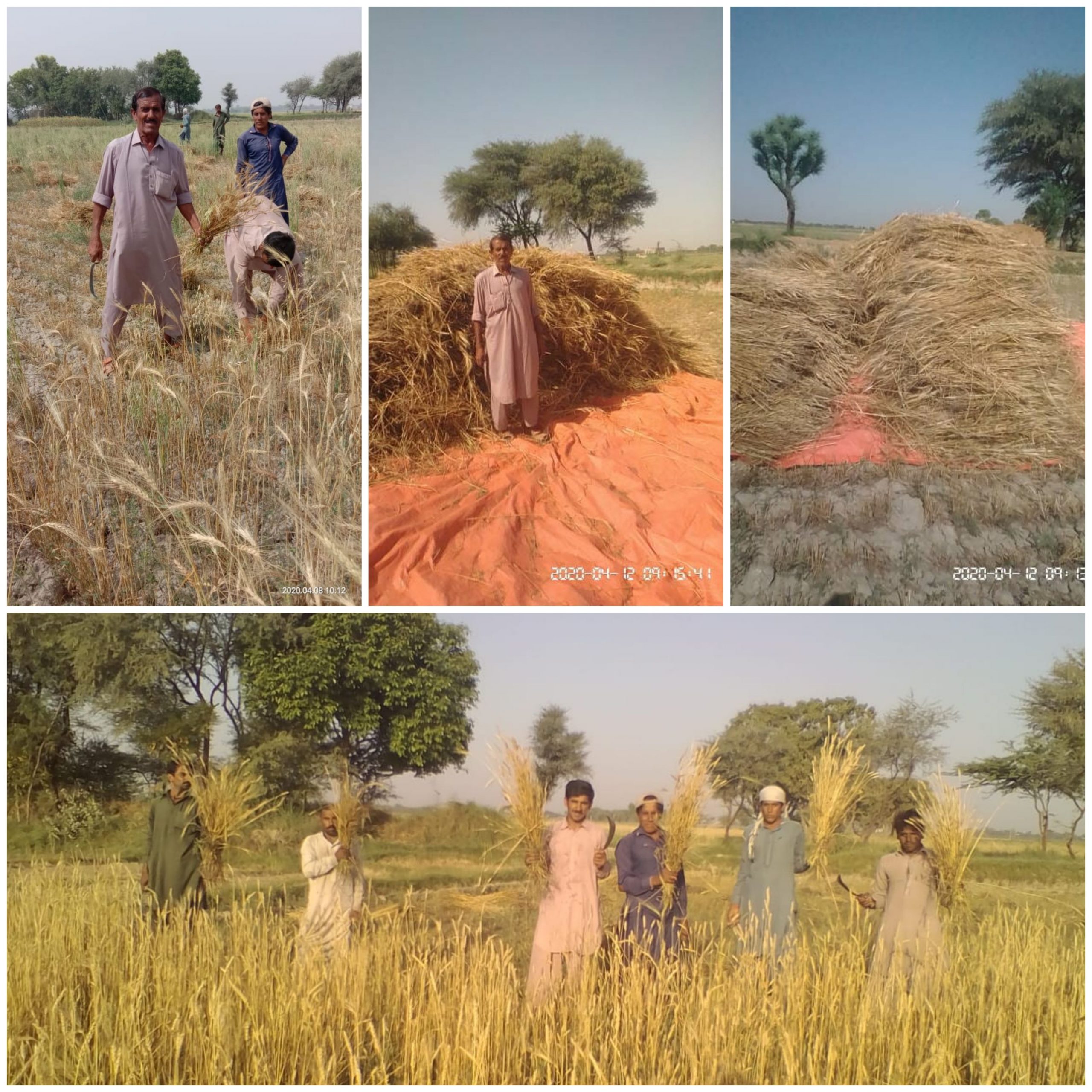
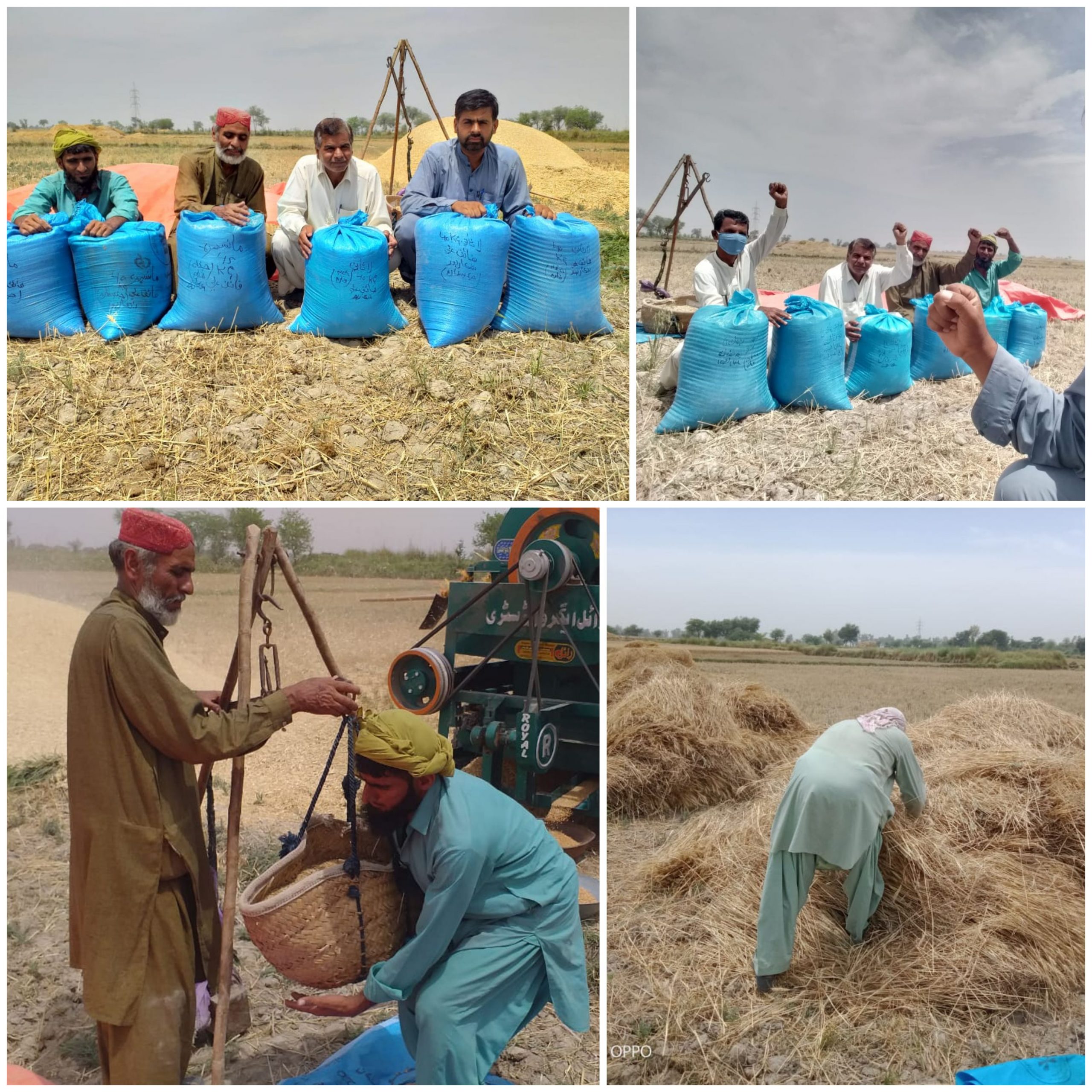
PKMT Jazba Farmers’ Cooperative proceeding towards Harvesting

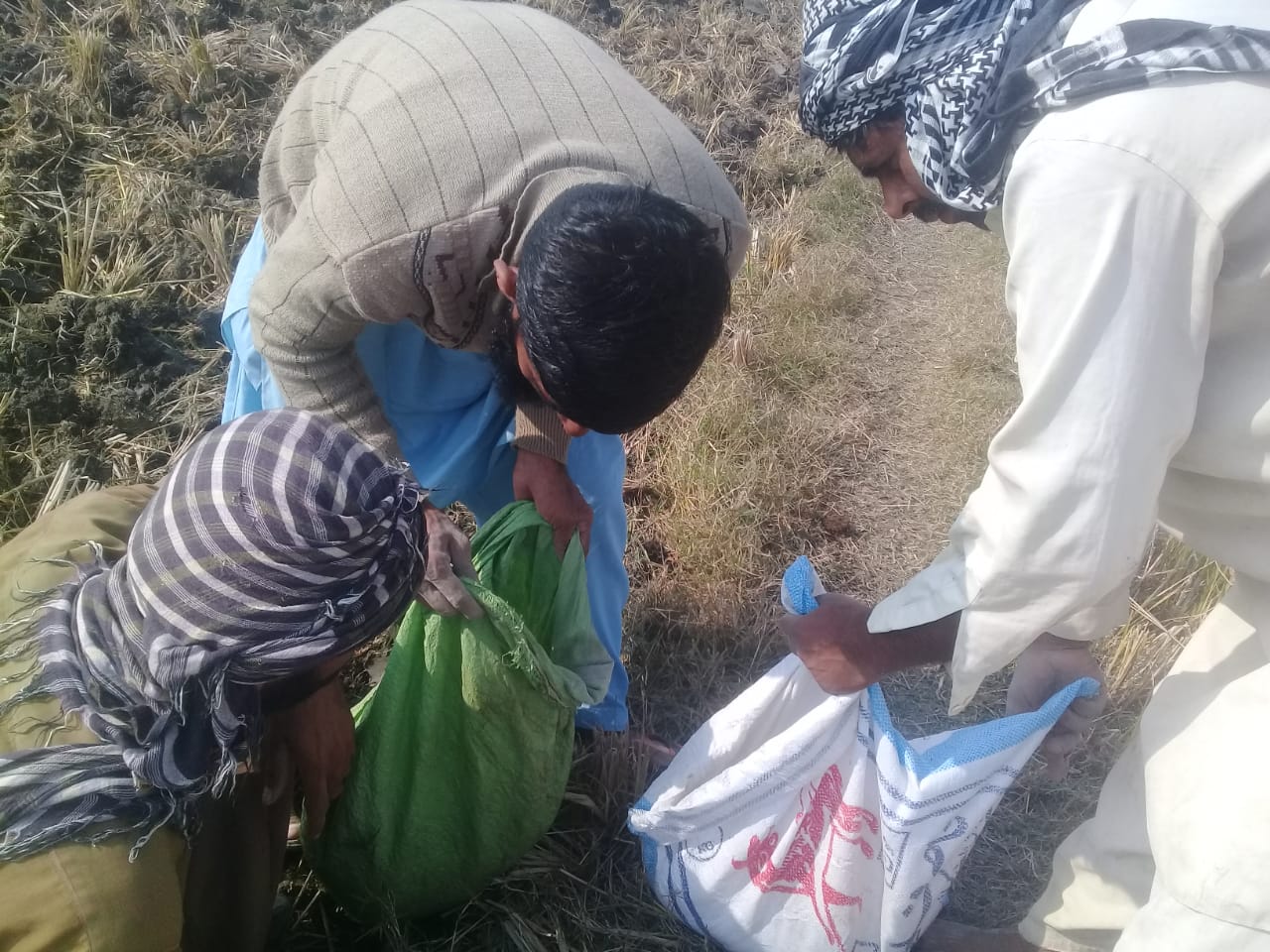
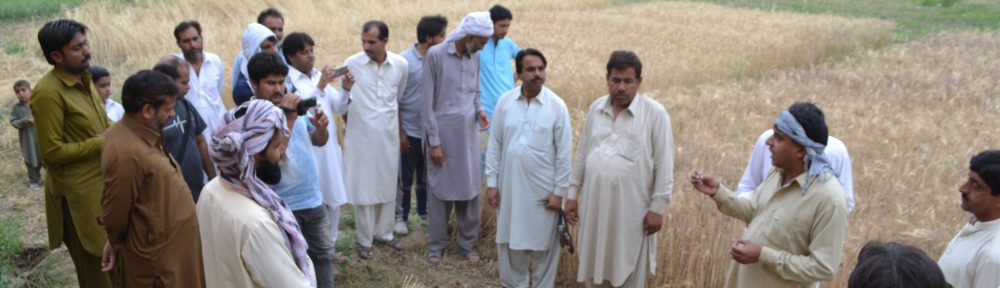
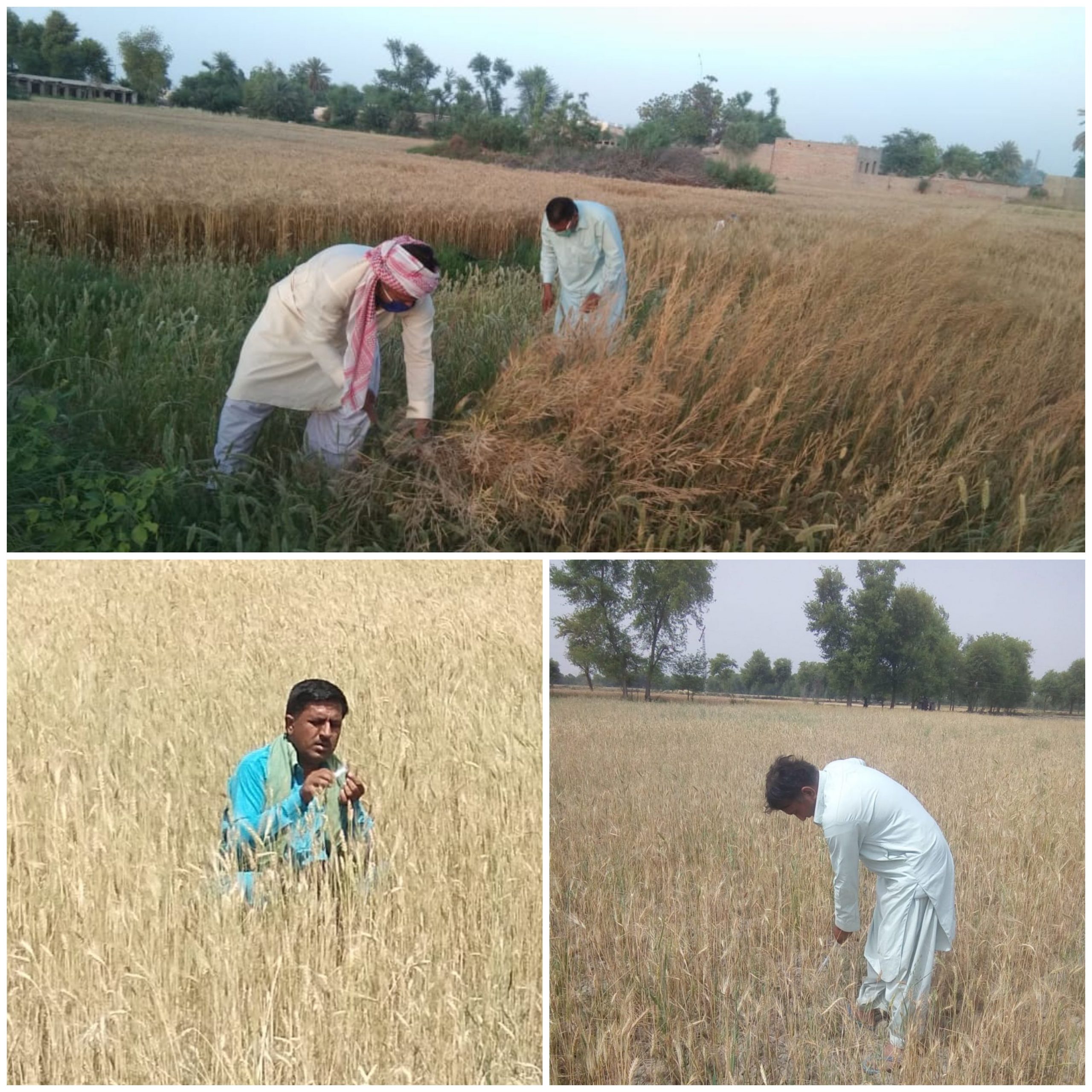
Under the PKMT Jazba Farmers’ Cooperative, farmers from all over Pakistan have started agroecological farms. They have sown the traditional seeds and make organic compost. As time passes the farmers from Sindh and Punjab are now sampling the crops and started harvesting and thrashing.

The farmers from Shikarpur, Ghotki Tando M Khan (Sind) and Multan (Punjab) are busy working in the fields.


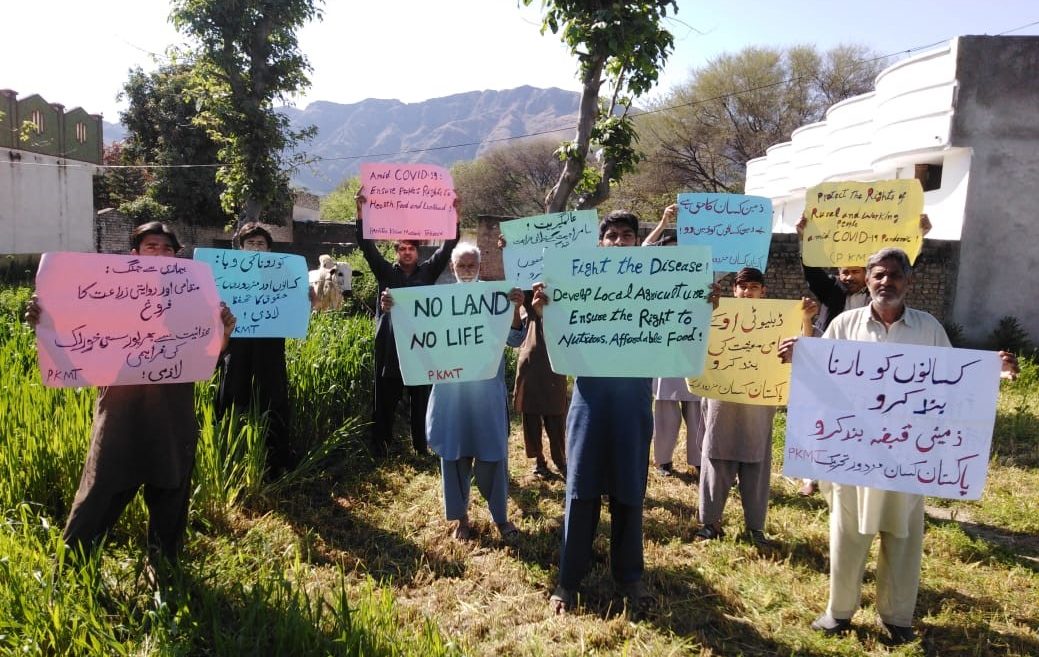
Assert and Defend the Rights of Small and Landless farmers amid the COVID-19 pandemic!

Press Release:

Day of the Landless 2020, March 29, 2020

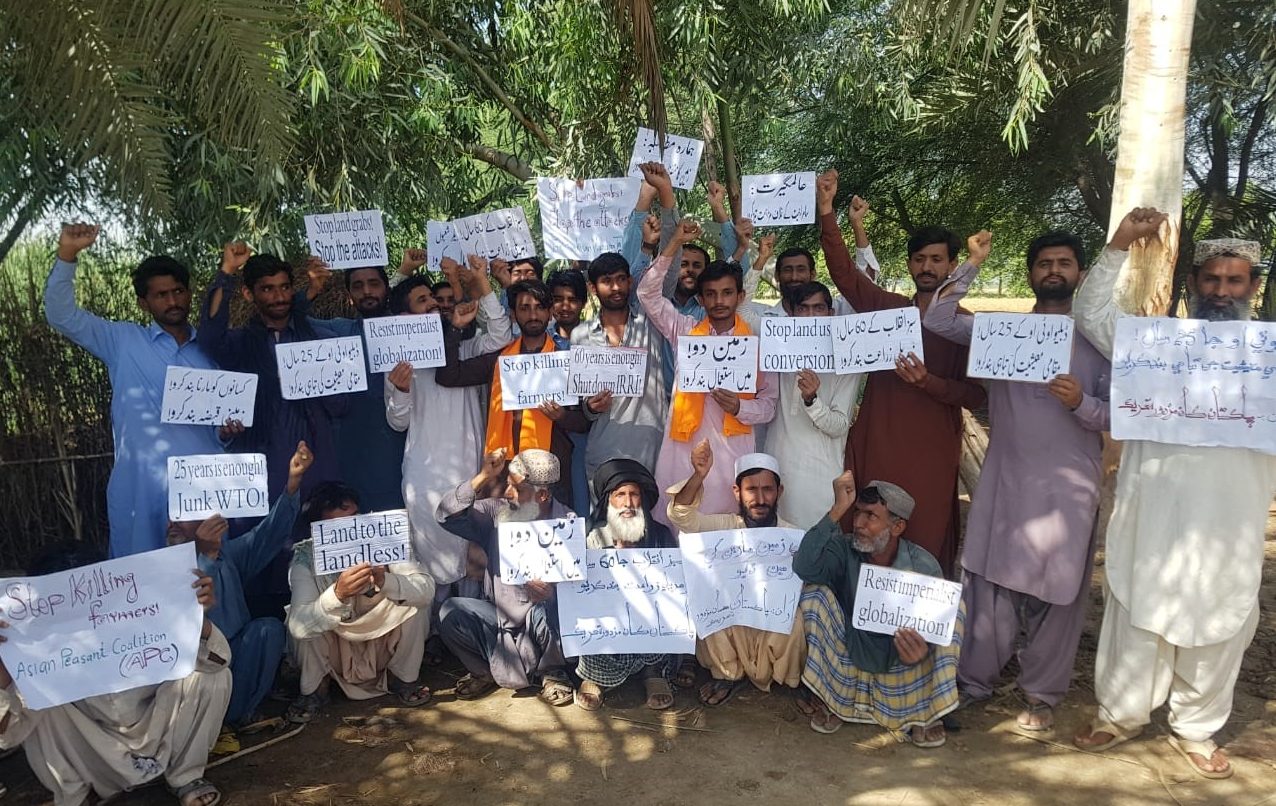
Roots for Equity and Pakistan Kissan Mazdoor Tehreek (PKMT) join hand with Asian Peasant Coalition (APC) and Pesticide Action Network Asia and the Pacific (PAN AP) to mark the Day of the Landless March 29, 2020.

Today, we commemorate the Day of the Landless with utmost concern as the landless rural people are among the most vulnerable to the impacts of the COVID-19 pandemic. The landless peasants along with who are also the small farmers with precarious land ownership or control are forced to work in a variety of oppressive conditions on lands under feudal ownership. Women agricultural are particularly work under the double tier of exploitation at the hands of the landlord as well as patriarchy. Along with this, capitalist agriculture through its mega-corporations has captured agricultural production and markets resulting in a huge increase in the percentages of the landless. More and more, the landless are forced to work in the informal sector on daily wages in a variety of situations. Together with the rest of ordinary toiling people, they bear the brunt of the raging public health crisis of COVID-19 that has paralyzed almost all economic activities and pushed them to further food insecurity and poverty.

With many countries implementing sweeping lockdowns and quarantines often with vague operational guidelines, to contain the spread of COVID-19, the agriculture and food supply chain faces great disruption with an escalating price-hike already sending food prices to very high levels. Livelihoods in jeopardy the small producers and poor consumers are suffering the major brunt of the lockdown. In addition, with a total ban on inter and intra provincial travel, agriculture workers and other daily wage earners have no means of finding work. It is feared that the COVID-19 may be used as a cover-up to further harass, and dislocate farming communities as part of evictions under land grabbing for corporate interests.

Furthermore, public health systems, eroded by decades of neoliberal assault such as privatization, commercialization and budget cuts, are already weak in general and are susceptible to collapse when pandemics strike. In Pakistan, the health care budget has never exceeded 3% of the total budget allocations. Hence, the situation has magnified a hundredfold for rural communities especially the landless.

We support and reiterate the immediate demands of the landless and all toiling peoples amid the pandemic –

  1. Ensure that the lockdowns and quarantines are not carried out at the expense of the food security of the people and that the right to produce and earn a living for small farmers, fishers and other direct food producers is duly respected in a manner that does not endanger their health;
  2. Provide immediate and substantial economic relief (including food grains, cash, and other forms of aid that are essential and appropriate) and social protection that are readily accessible to the marginalized sectors, including the landless rural people, as well as other forms of government assistance such as production and marketing support for the small food producers;
  3. Ensure that no further displacements of the rural people from their lands and livelihood are carried out in the pretext of COVID-19 lockdowns;
  4. Allot sufficient public resources to the health sector and make reliable public healthcare services, including free testing for COVID-19 infection and treatment, available without delay or difficulty for everyone, including the rural communities;
  5. As a learning, the health budget should be based on building a robust public healthcare system that is capable of functioning with equity and efficiency in face of all health crises.

Amidst the spreading darkness and misery due to a pandemic caused by more than anything else an ecologically and socially destructive mode of capitalist production, the movement of landless rural people and their supporters, together with all oppressed and exploited toiling peoples, shall remain among the bearers of light and hope.

Press Release; Urdu

Released by: Pakistan Kissan Mazdoor Tehreek (PKMT) & Roots for Equity

PKMT Jazba Farmers’ Cooperative Awareness Program

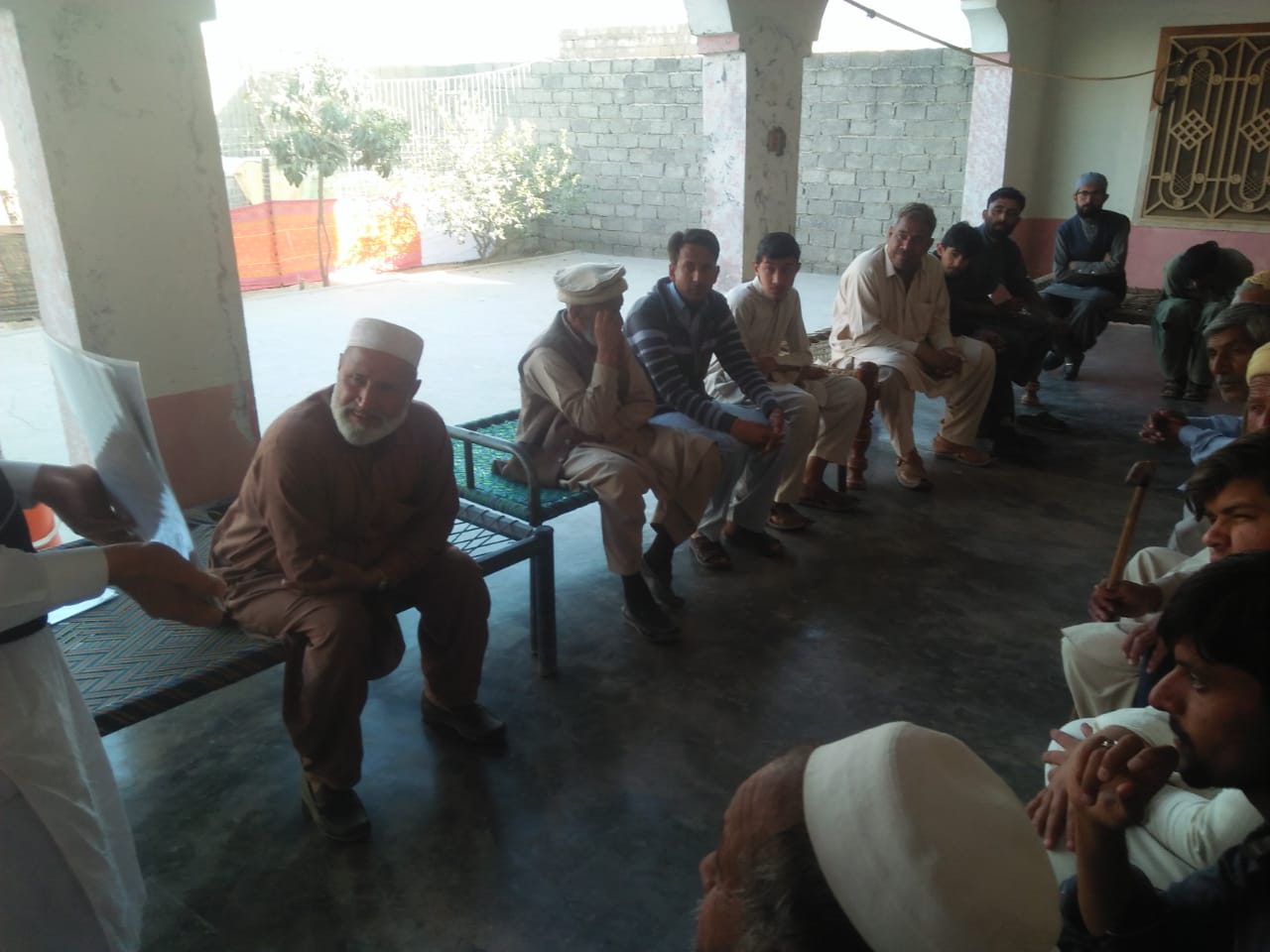
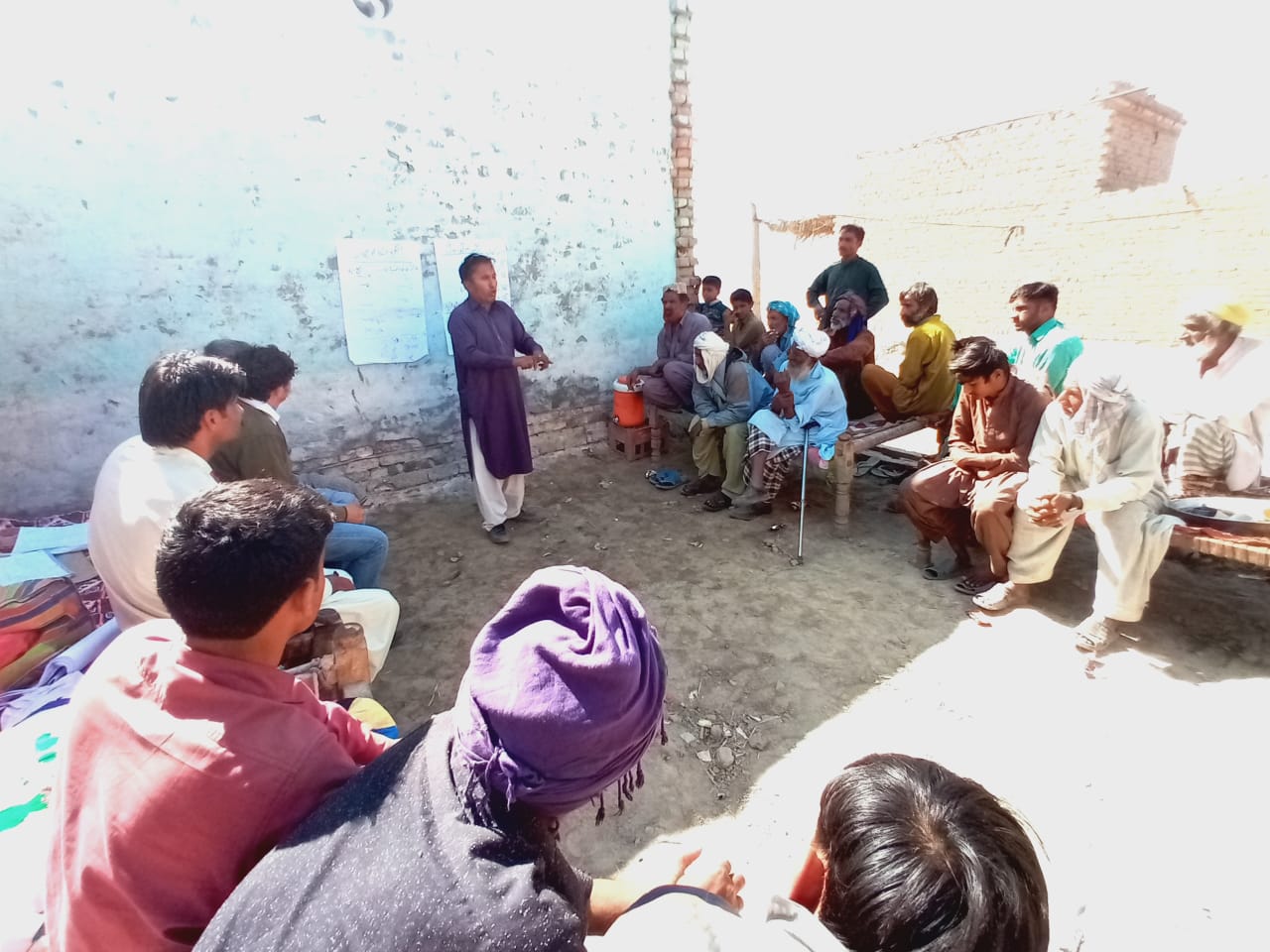
PKMT Jazba Farmers’ Cooperative organized an awareness session program based on the Agroecology farming and sustainable agriculture on village level at different districts of Sindh, Punjab and KP. In Sindh district Tando Mohammad Khan, Shikarpur and Ghotki, in Punjab district Multan and in KP district Haripur and Lower Dir the session were organized.

The session begins with the introduction of the team and the farmers. The team asks different questions from the farmers like who cultivate the land and which sort of cultivation is going on nowadays?


The participants replied that nowadays, we are using artificial means of production, which had chemicals in it, and we use chemical fertilizer in cultivation. Different topics of production and consumption were discussed with the help of pictures.

Unhealthy Production: The participants were told about the unhealthy food production that how modern machinery and chemicals are introduced to increase the production for example, breeding of cows by using artificial means, increasing of milk and meat of animals, increasing chemical spray, fertilizer, use of hybrid seeds and genetically modified seeds. The participants agree that they use the chemicals and machinery which results increase in diseases and unemployment.

Unhealthy Consumption: The participants were told about the unhealthy food like big companies use artificial methods in the preparation of food and are enforced on us for example, Potato chips, burgers, pizzas and unbalanced diet. The participants said that the junk food made by the companies has no energy, the threat of diseases increases and the food is also expensive. Capitalism increases class system. The rich influence on poor just because of this system. The working class is deprived of basic needs of life like food and health; we should not use these things.

Healthy Production: The participants were shown opposite mechanical and artificial method of production. The natural and traditional ways of farming, which includes milking, traditional way of cultivating pure and healthy food. According to our history, we use traditional seeds and eat pure food and live in a clean environment for centuries. The capitalists now capture the markets enforced farmers and labors into poverty.

Healthy Consumption: The participants said that the food from companies are unhealthy, the bread, Saag (local spinach), Lassi, butter, pure ghee are healthy foods. We should promote our own things, which we get through natural means.

Poverty and hunger! Why ? The adopting of chemical methods and an increase in production, the participants said that hunger, poverty and unemployment is increasing day by day. Continue reading

Preparation of Green Compost at the lands of women Farmers in Punjab and Sindh

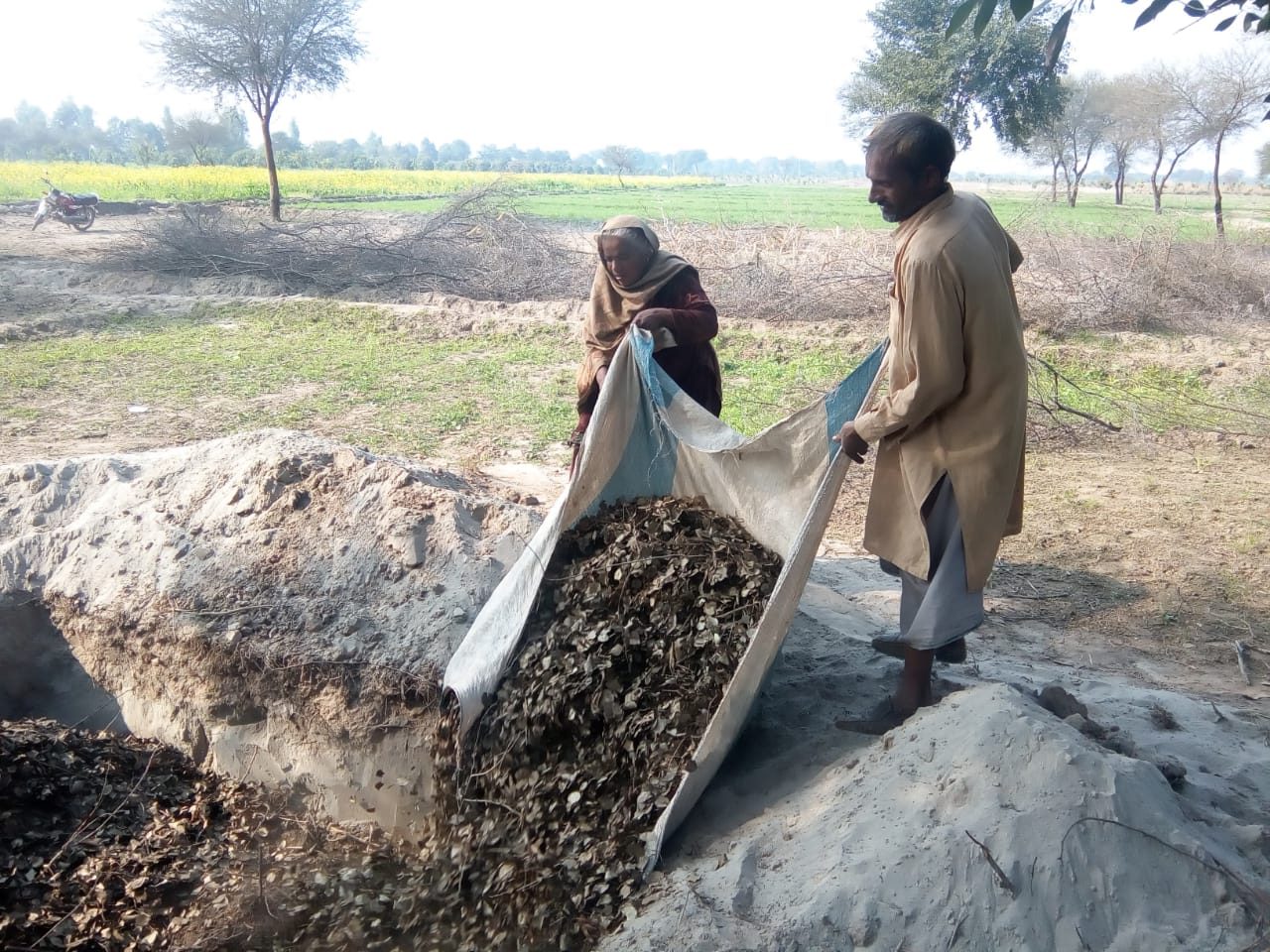
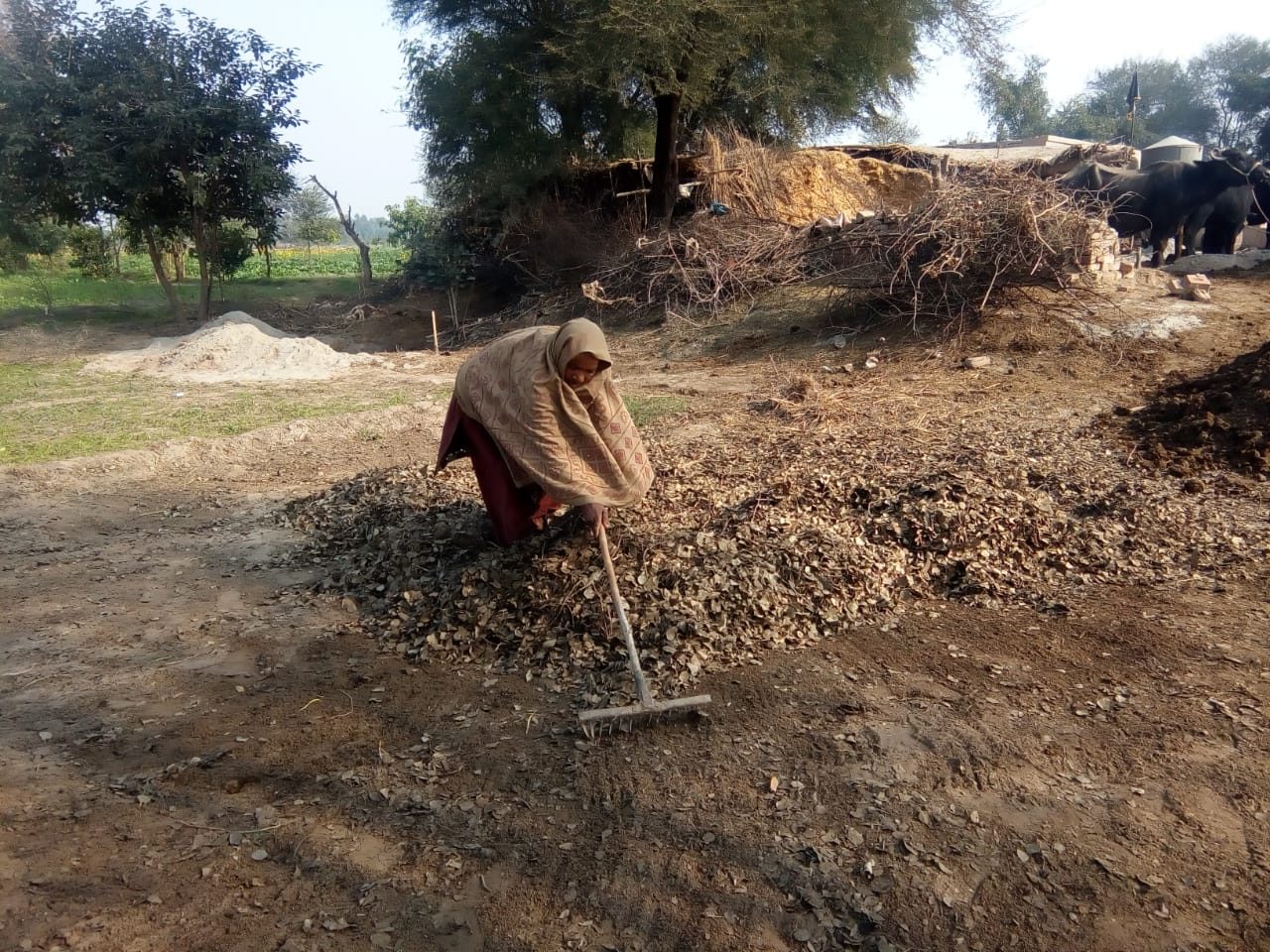
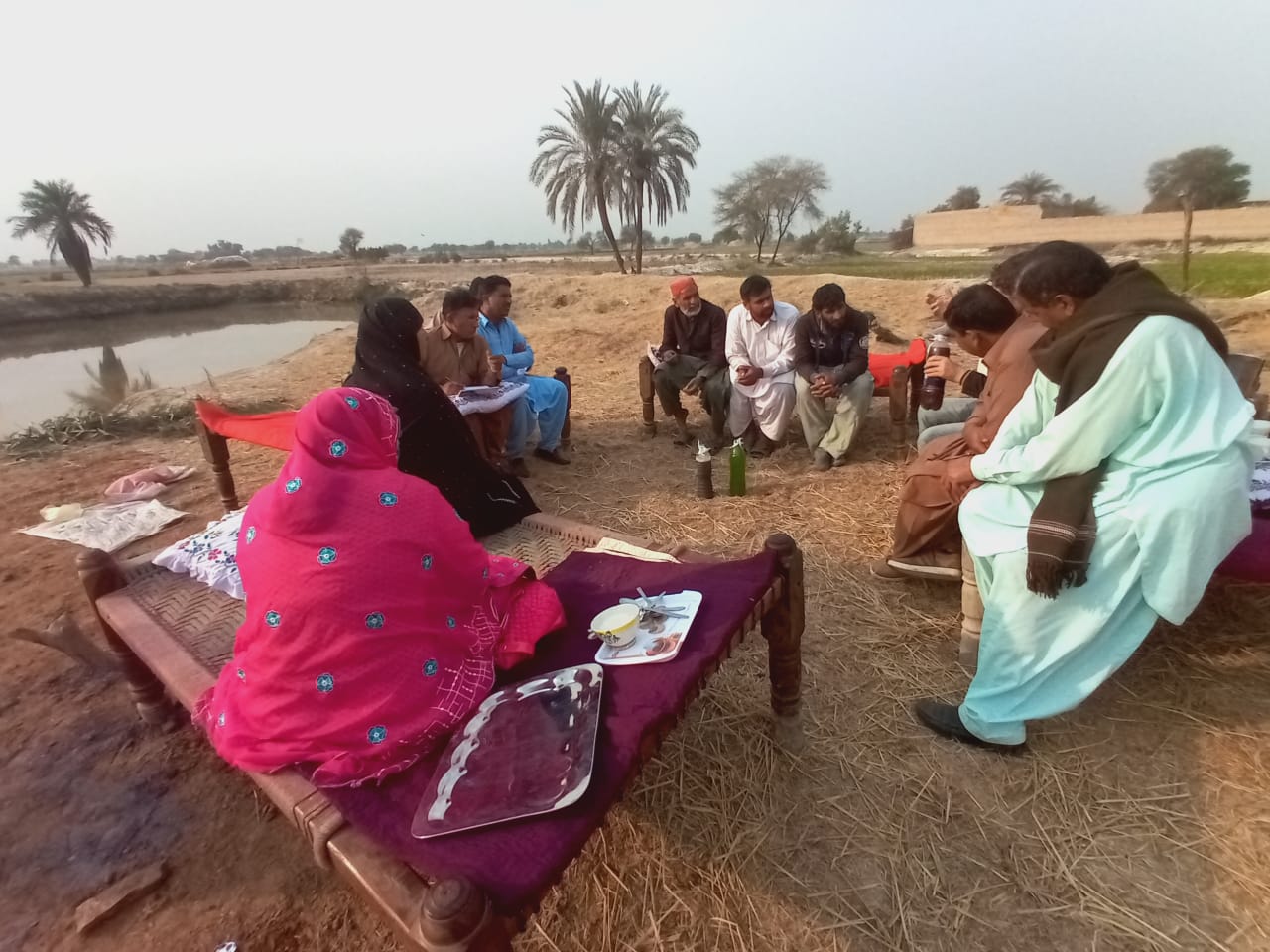
Under the base of PKMT Jazba farmers cooperative there are four Agro ecological farms which tend by women. A woman’s presence led farms are entirely new experience and will be a model for rural women empowerment. Farmers are having meetings and preparing green compost for their crops.


Preparation of green compost in Multan, Punjab

A woman gathering dead leaves of trees for making compost

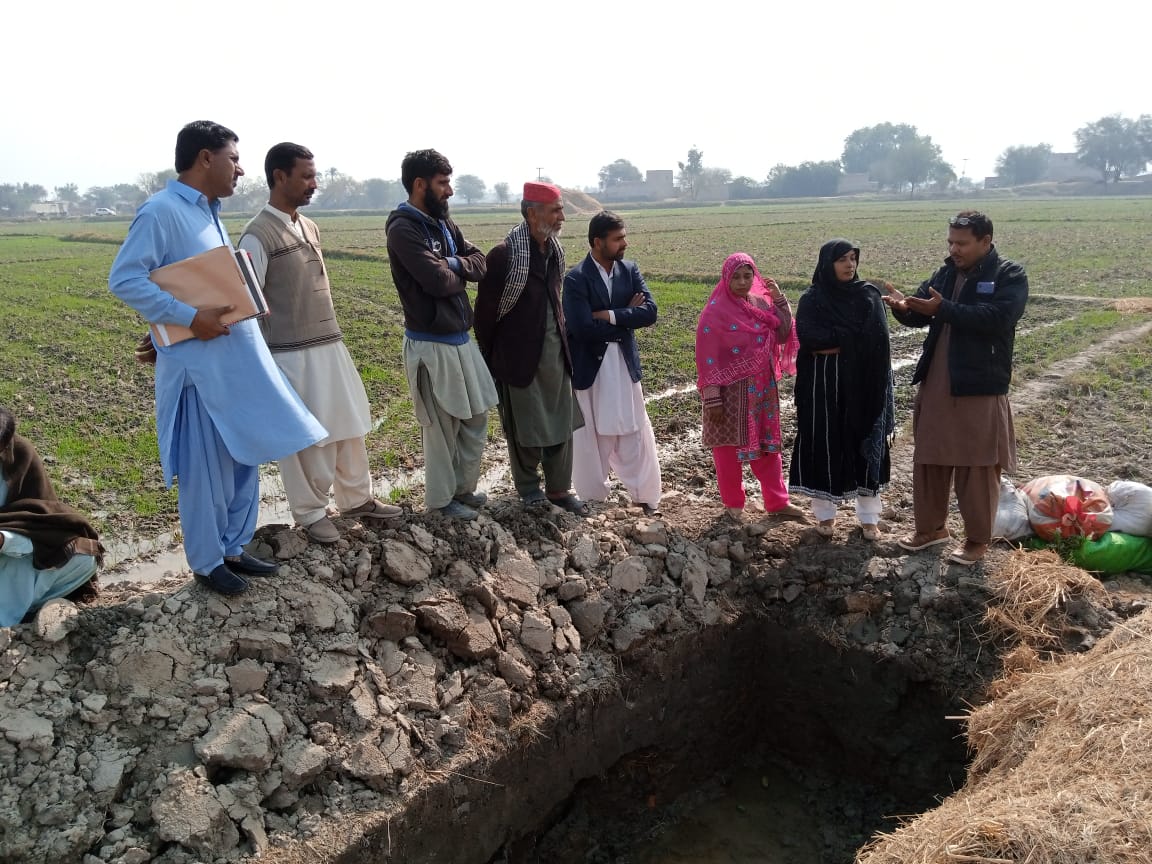
Sindh Jazba cooperative farmers having meeting in Shikarpur, Sindh after a visit to farmers while making green compost

Interviews from the farmers of PKMT Farmers Cooperative Jazba

Under PKMT Farmers’ Cooperative Jazba there are 12 agroecological farms in three provinces, Sindh, KPK and Punjab. Each farm is on one acre of land. Six farms are in Sindh, four farms are in KPK and two are in Punjab. Out of these twelve farms, women farmers manage four.

During our visits to the Jazba farms we carried out interviews with different farmers. The farmers provided details on preparation of land and the varieties of traditional seeds they have sown.  They also described green compost preparation that they are carrying out on their land so that will be applied on their land. The farmers were also preparing the natural pesticide, which they will use if needed.

  1. BakhtiarZeb, farmer from Lower Dir said that he has been part of PKMT since 2011. He said that our ancestors did not use chemical pesticides such as DAP and urea but we have used it and face the harmful effect on the crops. Our father had also advised us and stopped us from using chemical inputs as it carries disease. Now as we realize it, we have also gone back to sustainable agriculture.

To prepare natural fertilizer (green compost) we have put rotten vegetables as well as peel from vegetables collected from our home use and animal manure. It will be ready in two months, but will look open the pit again after 10 to 15 days. Bakhtiar said that “I believe in natural traditional farming and have practiced it from a long time.”

He has willingly contributed one acre of his land toward the Jazba cooperative. In his one acre of land he has sown two kinds of traditional seeds, namely, Haripur white wheat (which was obtained from a farmer in Haripur about 9-10 years ago) and Ratti (which is a red colored seed indigenous to Dera Ismail Khan, Punjab). He added that he is also making natural spray for pesticides from urine of cow as an experiment.

  1. The Farmer from district Shikarpur, Ali Gul Solongi, said that he is member of PKMT. He had sowed three varieties of wheat seed in his one acre of land. He had used 25 kg of a traditional seed from Mansehra, Khyber Pakhtunkwa, 25 kg of seed from Rajanpur, Punjab and 15 kg of Galaxy seed form Sindh. The last is not a traditional seed but has been used over and over again for the past four years. It is being sown for the fifth time with in PKMT farms. He has added the third variety as he feels that 25 kg of seed may be less for the acreage on which it is being used.

According to him, he has turned to sustainable way of cultivation so that he can grow healthy seed. He feels that production may be low, but it will be healthy. Secondly, expenses will be reduced and yield pure seed. Ali Gul added that we will be able to eat this grain, save it as well distribute it to other farmers. His message was “Desi beech ugao . . . companeo ko bhagao” (sow traditional seeds and drive out companies).

Upscaling and Strengthening Agro ecology:

Pakistan Kissan Mazdoor Tehreek (PKMT) has established a Farmers Cooperative and named it Jazba. Jazba has enlisted various farmers to further agro ecology-based farms in seven districts spread over three provinces of Pakistan with the collaboration between various actors, that include mass-based farmers’ organizations, non-government organizations, academia and consumer groups.

Jazba aims to upscale and strengthen agro ecology and to build technical and social alliance between various actors such as farmers movements, trade unions, women’s groups, scientists and consumers to advocate for agro ecology and food sovereignty and to bring out the strength of agroecology as a science, as a movement and as a practice, especially in face of corporate hegemony, which is detrimental to farmers self-sufficiency, health and environment.

No doubt the collaboration is more of a political response to the threats being faced by society at large, but most importantly the marginalized especially landless and small farmers, women farmers and general public.The collaboration is also helping in linking farmers with consumer markets as well.

A foundation stone of Jazba is to promote safe, nutritious and healthy food for all. The extensive use of chemicals in corporate farming based on use of hybrid and genetically modified seeds, toxic pesticides and chemical fertilizers has severely impacted the health of all living things as well has been a cause for massive destruction of biodiversity.

Of the 12 agro ecological farms, six are in Sindh,two in Punjab and four in Khyber Pakhtunkhwa.

Every farm consists of one acre of land. Four of the 12 agro ecology farm, four are managed by women. Presence of women-led farms is an entirely new experience and will be a model for rural women’s empowerment.

Each farmer has only used natural fertilizers from animal dung and green compost. Six farmers have already initiated making compost on the land; the other five are preparing land but has been postponed due to rains in December 2019 and January 2020. Formal initiation of the 12 farms was initiated with wheat sowing season.An initial training for preparing biological pesticides was given early in the project.

PKMT and its partners will launch a campaign to create greater awareness of agro ecological practices, its economic and social benefits and to motivate other farmers and groups to engage in agroecology.

“Corporate Agriculture: Decent Livelihood, Pure Nutritious Food and Environmental Justice Impossible!” (PKMT) 12th Annual Assembly

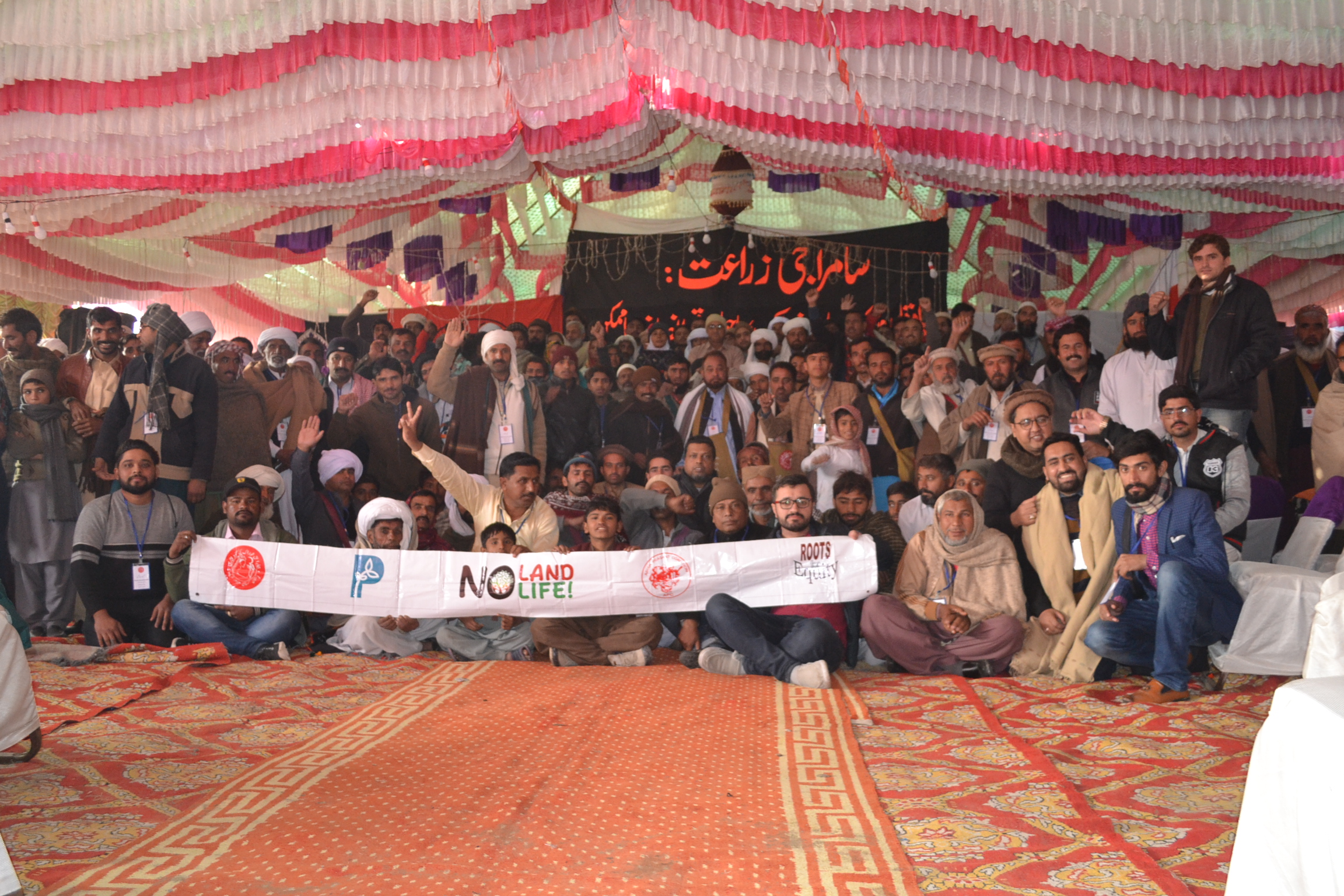
Pakistan Kissan Mazdoor Tehreek (PKMT) held its 12th Annual Conference 28, December, 2019 in Jampur, Rajanpur. The theme of the conference was “Corporate Agriculture: Decent Livelihood, Pure Nutritious Food and Environmental Justice Impossible!”

The Annual conference started with the registration of the members from various districts of the country.

The 12th PKMT General Assembly was kicked off with welcome remarks from the Punjab provincial coordinator Maqsood Ahmed, Rajanpur district coordinator Abdul Ghafaar. A one minute silence was observed in memory of Ghulam Yaseen, PKMT member who had passed away earlier this year.

The program began with a theatre  performance from the PKMT group “PUKKUK”.

Key Notes were delivered by Azra Talat Sayeed, followed by two different sessions focusing on the debacle of corporate agriculture, its impacts on farmers’ livelihood, climate crisis and decreasing access to safe nutritious food. Guest speaker was a trade unionist Mr Junaid Awan, Railway Workers Union.

Khyber Pakhtunkhwa provincial coordinator Mr Fayaz Ahmed provided a detailed run down on PKMT’s activities for 2019.

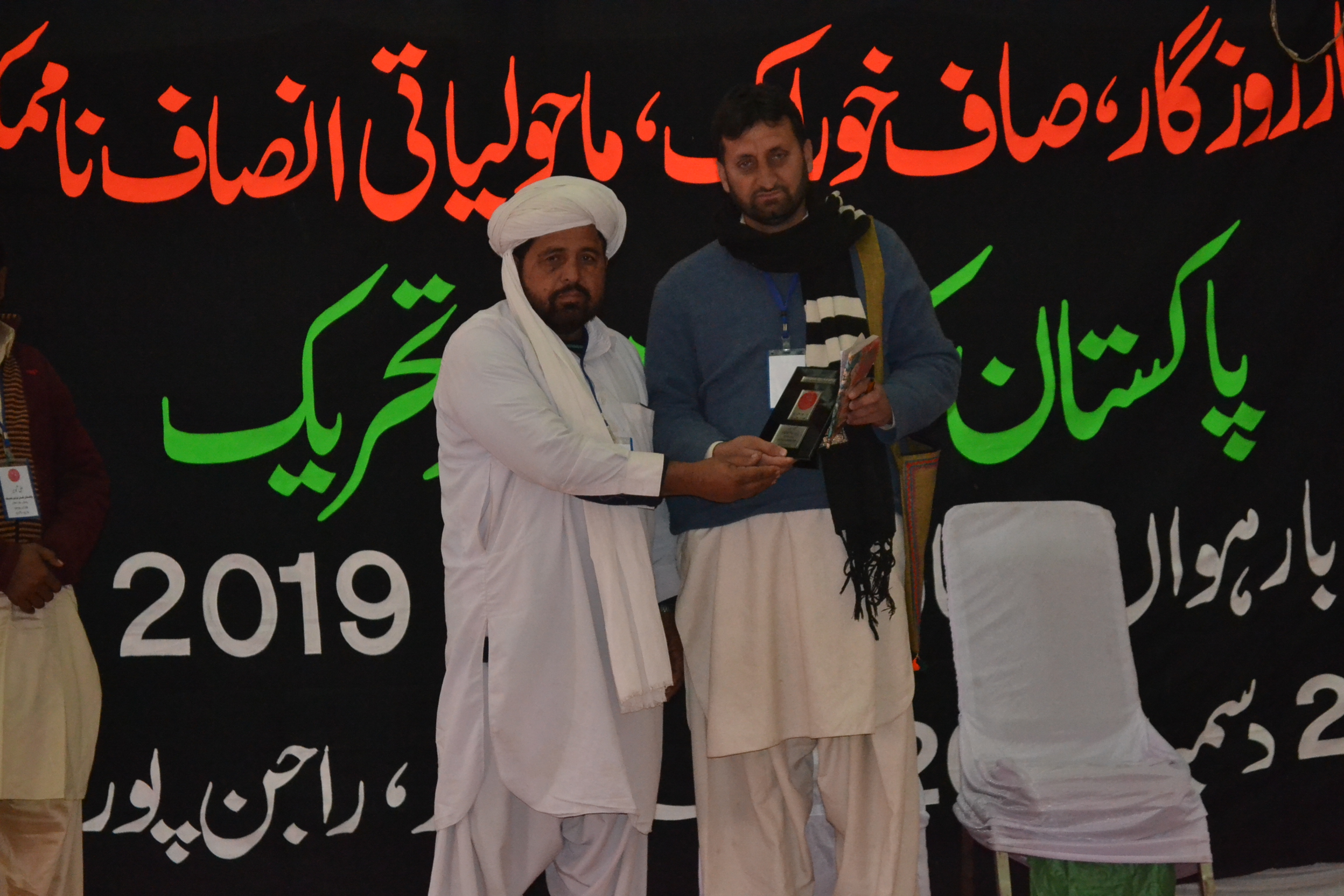
An award giving ceremony was conducted for farmers practicing Sustainable Agriculture. The two farmers who received the PKMT PaidarZarat Award were Mr Bakhtayar Zeb, Lower Dir, Khyber Pakhtunkhwa, and Mr Ali Gohar, Gohar, Sindh. Both were chosen for receiving the award based on a criteria set by the PKMT National Seed Committee.

A session by the name of “Bol K Lab Azad Hain Tere” provided space for issues raised by famers across the country.

A vote of thanks was delivered by the Sindh provincial coordinator followed by the PKMT tarana sung by the members.

Power To The Peasants: Reclaiming Lands, Reclaiming The Future

26/03/2019
Part one of a two-part features series on the Asian Peasant Coalition (APC) in commemoration of the Day of the Landless on 29 March.

“Further consolidate the Asian peasants” was the theme of APC’s 5th General Assembly held in Surat Thani province, Thailand in October 2018. (Photo: PANAP)

Perhaps there is no greater irony in the 21st century than the fact of landlessness that millions of peasants grapple with in the face of a global land rush — the large-scale acquisition, lease, or concession of lands in corporations’ bid to seek resources most profitable in the global markets.

The resulting dispossession of farmer communities seems but an afterthought when, in reality, it is an affront to the industry and dignity of the very people who feed the rest of the world with food that they themselves often cannot afford to eat. Few countries illustrate the magnitude of the problem better than those in Asia, where rural unrest is set against the backdrop of poverty and political instability. It is in this context that the Asian Peasant Coalition (APC) was formed.

Now in its 15th year, the APC continues to unite landless peasants, farmers, farm workers, food producers, fisherfolk, indigenous peoples, herders and pastoralists in Asia. More than 15 million members commit to consolidating gains on the ground to defy all forms of peasant oppression.

It is the role of peasant movements like the APC to step in where governments fall short, where ruptures for social change can come forth. No shortcut can be taken to help the peasantry climb out of the ditch decades of subjugation has plunged it into, but the APC’s aims are nowhere near impossible: to assert the right to land in the pursuit of genuine agrarian reform, to sever the ties between states and transnational monopolies, and to upset the dominion of imperialist powers.

Farm labor and feudal lordship

In many Asian countries, to say “land is life” is to speak not just of a matra but of a fundamental reality. Loss of land might as well be a death sentence to farmer families, indeed, as it entails loss of livelihood, security, and food. The estimated 15 million members people living in rural areas in Asia are bound to land, and it is upon their backs that the region imparted 49.8% of global agricultural value in 2013, according to the Food and Agriculture Organization (FAO) of the United Nations.

But while Asia boasts of vast tracts of agricultural lands, much of which, however, are worked by farmers and farm workers who own but smallholdings, if at all. Among the foremost campaigns of the APC has been to intensify the struggle against land and resource grabbing and all forms of exploitation that remain rooted in the monopoly of a small fraction of local landowners.

Centuries of colonial experience of Asian nations like the Philippines and India have entrenched such feudal arrangements in agricultural production. The APC, since its inception, has helped peasant organizations decry tenurial relationships that perpetuate bonded labor as payoff for land rents, debts, and threats of displacement that landless farmers find themselves worrying.

At its first general assembly in Dhaka, Bangladesh in November 2004, all member organizations recognized the tragedy in how more and more Asian people got mired deeper in landlessness, poverty, and hunger while doing all the work under unconscionably exploitative conditions at the behest of compradors and big landlords.

Almost 15 years later, current APC chairperson Poguri Chennaiah of the peasant group Andhra Pradesh Vyavasaya Vruthidarula Union (APVVU) in India would echo this sentiment at the APC’s fifth general assembly in Surat Thani province, Thailand in October 2018. While he recognized the victories on the ground — particularly the land occupation activities by a growing number of farmers of late — it still cannot be denied, Chennaiah said, that the majority of those suffering from malnutrition in the world come from Asia, the bread basket for all but its own peasantry.

With the scale of landlessness and land grabbing accelerating at an alarming rate over the past decade, the APC has tried to outmatch this injustice in its vow to intensify the fight for genuine agrarian reform founded on the principle of “land to the tiller.”

Yet expropriation of land is a problem that tenants face not only against usurious and abusive landholders but also against governments that offer little to no avenues for redress. Semi-feudal structures are no longer just shored up by a local elite but also by prevailing systems of law and governance that aggravate land insecurity. The state is as much to blame for its complicity, from inutile intervention in land conflicts to outright harassment or criminalization of peasant leaders.

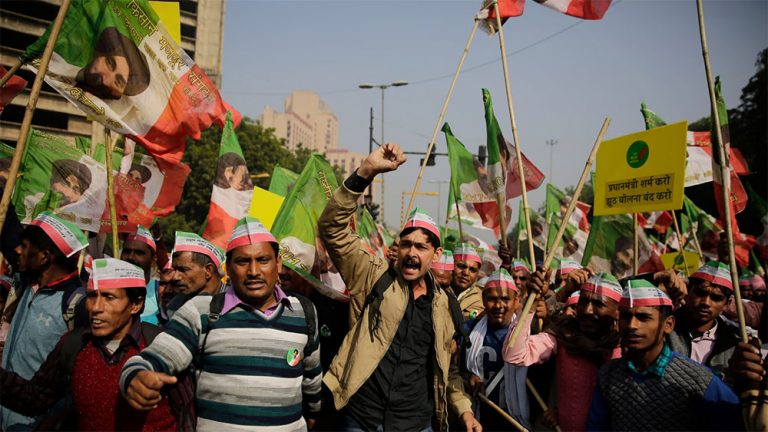
Tens of thousands of debt-laden Indian farmers descended on New Delhi to demand from the administration a one-time loan waiver in the run-up to the parliamentary elections, November 30, 2018. Poguri Chennaiah, chairperson of the Asian Peasant Coalition (APC), cited recent massive mobilizations in India as proof of the peasant movement’s resounding calls for the government to take action. (Photo: AP)

Authorities and autocrats

The APC has never wavered in calling out governments that sponsor all but the welfare of the peasant sector. It has also unabashedly professed its progressive stance, as in its first general program of action in 2004 which states its campaign to “resist the maneuver, betrayal, and divisive character of local regimes against the farmers.”

This objective is far from lip service. The coalition, for one, has supported mass demonstrations of peasants against policies typically hoisted under the banner of ‘development.’ “But is it the development for the people who have been depending on natural resources?” said Chennaiah. “Or is it for the small percentage of the people who are plundering what meager resources have been vested in the communities?”

Development projects are so called only from the vantage point of a private sector that receives concessions from government offices paralyzed by patronage, corruption, and profit seeking.

In Bangladesh, for example, the government has allowed much of the arable land it once vowed to distribute to landless peasants to be turned into residential and infrastructure developments or export processing zones. In Cambodia, while public lands attractive for tourism get privatized, the authorities tasked to resolve land disputes perform overlapping administrative functions and get embroiled in red tape. Indonesian mining laws, meanwhile, grant the state blanket power to encroach on indigenous peoples’ land to pave the way for operations of mining concessionaires.

Local farmers also rarely rely on the courts. The recent decision of the top court in India to reject the ancient ownership claims of over a million forest dwellers has not only triggered a series of protests but also evinced the anti-people bent of most legal instrumentalities.

Chennaiah remains hopeful, however, that public pressure would halt the eviction order, just as it did when tens of thousands of environmental defenders and subsistence farmers protested and forced the World Bank to withdraw its funding for the Sardar Sarovar dam in 1993, which would have displaced more than 140,000 villagers.

“The people’s resistance has been strong enough,” said Chennaiah, “to remind [the government] that its role is not to work as a broker for the corporate world but that it has responsibilities to the people of its country.”

Legal frameworks that facilitate land grabs and worsen peasant troubles could even take on more malevolent, blatant forms. From January 2017 to March 2019, PAN Asia Pacific (PANAP) has monitored through online news and reports from its partners a total of 101 cases of arrests, detention, and legal persecution worldwide, not to mention the 159 politically motivated killings related to land conflicts and struggles.

The deadliest country for farmers and land rights activists, the Philippines proves an interesting case study for the increasingly authoritarian tendencies in Asia, which the APC has identified as an emergent concern. Besides extrajudicial killings in the countryside, members of progressive groups and peasant activists are tagged as insurgents and suffer at the hands of alleged paramilitaries or state forces. Leaders like Philippine President Rodrigo Duterte are resorting to more than just incendiary rhetoric to muzzle with impunity the clamor against state-backed seizure of lands.

It would be short-sighted, however, to divorce the rise of authoritarian rule from the failure of the string of policies of liberalization, privatization, and deregulation that have set the stage for it to begin with. The APC recognizes that the plunder of Asian resources are indeed symptomatic of the expansionist takeover of international markets and of more dominant Western economies.

Collaterals and collusions

While land and resource grabbing is inherent in capitalism, it has become one of the linchpins of neoliberalism — the global order for the past four decades that has privileged big businesses over basic social services, tax cuts for the rich over decent wages for the working class, and, in agriculture, profit-oriented models over sustainable farming and equitable land distribution.

The impetus for global land grabs originates chiefly from the appetite of the United States and Europe for fuel, food, and warehouses in which to foist off their detritus and surplus. From this supply chain, the Global South stints on scraps in the form of foreign direct investments. In recent years, the rise of China as a new global power is also fueling greater conflict over land and resources, particularly under its ambitious Belt and Road Initiative (BRI) that so far spans 65 countries worldwide.

“Corporate plunder has been intensified along with globalization,” said Chennaiah. “We at the APC believe that no isolated country-level struggle can defeat these forces globally.”

The coalition continues to denounce the hand of multilateral institutions like the World Trade Organization (WTO), and the International Monetary Fund (IMF) and World Bank in wrecking local economies to the detriment of vulnerable groups like the peasants. In October 2018, former APC Chairperson Rafael Mariano talked at the coalition’s general assembly about the double burden of financial instruments like speculative funds and bonds that these institutions bank on to drive prices up.

Moreover, the public-private partnerships (PPPs) Asian governments foster with multinational lenders rest on an uneven ground. Funds for some conditional cash transfer (CCT) schemes, for example, partly come from loans from the WB and the Asian Development Bank (ADB).

“The CCT in the Philippines, Bangladesh, Indonesia, Pakistan and other parts of the world is actually a doleout program that merely exacerbates each country’s debt,” said Rahmat Ajiguna, chairperson of Indonesian peasant group Aliansi Gerakan Reforma Agraria (AGRA) in an APC statement on World Food Day in 2015. Currently the Internal Vice Chairperson of the APC, Ajiguna described the onerous policy conditions tied to these loans as ultimately damaging to food sovereignty of the borrowing, underdeveloped countries.

Recently, loans have been pouring in not only from the West but also from Asia’s richest nation China, which is now gaining muscle to rival the economic heft and military might of the US. It has cashed in on the collapse of trade barriers. Its BRI has been afoot and ensnared countries like Sri Lanka in debt bondage. Its neighbors Laos and Myanmar have had farmer families displaced to make way for Chinese-funded rails and dams.

As China continues its ascent and starts to harbor its own imperial desires, a great majority of Asian countries remains in the throes of rural backwardness. Such stagnation is telling of economies hitched to corporate and colonial/neocolonial structures of control. This comes at the expense of those at the bottom, whose resistance nonetheless remains alive.

This resolve and energy of the poor and landless to persevere in reclaiming their rights fuel the APC’s campaign for a more united front of peasants in the region. For too long, they have been paying the price for agrarian programs gone amiss and promises of relief still unrealized. When measured against the costs, their decision to rise up promises a better shot at a life with dignity.

Power to the Peasants: Reclaiming lands, reclaiming the future